
From Plantations to Prefabrication: Global Experts to Headline The Precinct Investor Symposium
The future of Australia’s housing will rely on advanced manufacturing, driving prefabrication solutions, anchored in timber-based building systems, especially engineered wood products produced from the nation’s plantation resources.
That future will be the centrepiece of The Precinct Investor Symposium in Melbourne on 14 October 2026, where three internationally recognised leaders in plantation market analysis, engineered wood manufacturing and architectural design will outline how Australia can build a domestic value chain linking plantations, products and prefabrication.
IndustryEdge Managing Director Tim Woods, Raute engineered wood products specialist Roumiana Vassileva, and Melbourne School of Design Director Professor Dan Hill will deliver a keynote program examining the changing face of Australia’s plantation industry and the opportunity to connect this established resource with the way homes will be designed and built in the future.
Tim Woods is one of Australia’s leading strategists in the fibre value-chain. For more than half a decade his focus has been on transforming the plantation fibre supply chain in the Green Triangle to produce high‑value engineered wood products. This work already includes the development of bluegum glulam (GLT) and the rapidly developing opportunity to manufacture Laminated Veneer Lumber (LVL).
Heading an industry collaboration, Woods now leads The Precinct development, which will manufacture LVL, GLT, a range of other timber-based building products and prefabricated building components, at world scale in Portland, in south‑west Victoria. He will outline The Precinct concept, manufacturing platforms and opportunities.
“Australia imports enormous amounts of engineered wood products and other building materials. We have to turn that around, reduce our wood fibre exports and rapidly increase our sovereign manufacturing to increase national resilience in housing,” Mr Woods said.
“This transformation is urgent, to support Australia’s evolving transition towards more industrialised and prefabricated solutions that can increase housing supply and quality.”
Roumiana Vassileva is a global market intelligence executive with 25+ years of experience in engineered wood products, spanning production, operations, sales and marketing. For 15 years, she has led market intelligence and business development at Raute, a global technology leader in peeling-based technology solutions. Her perspective connects LVL’s material efficiency, advanced technology and market evolution with automation, prefabrication and modular construction—revealing the strategic leap from producing engineered wood to building scalable, globally competitive construction systems. She brings a global lens to the opportunities, challenges and competitive dynamics shaping Australia’s engineered wood future.
Professor Dan Hill brings an international perspective on design, cities, technology and the built environment. His keynote will explore how prefabrication, new materials and industrialised construction could help Australia rethink not only how homes are built, but how we design the places in which people live.
Alongside other expert speakers and panelists, Woods, Vassileva and Hill will draw the connections from plantation fibre resources, to world-scale advanced manufacturing of engineered wood products, to the prefabricated transformation of Australia’s dwellings and built environment.
“The opportunity is much bigger than forestry or manufacturing in isolation,” Mr Woods said.
“Australia has the ingredients it requires to increase sovereign housing supply capability. The Precinct is about bringing those pieces together and creating a new and more resilient domestic value chain from plantations to products to prefabrication.”
The Precinct Investor Symposium will be held in Melbourne on Wednesday, 14 October 2026. To learn more visit www.theprecinctportland.com.au
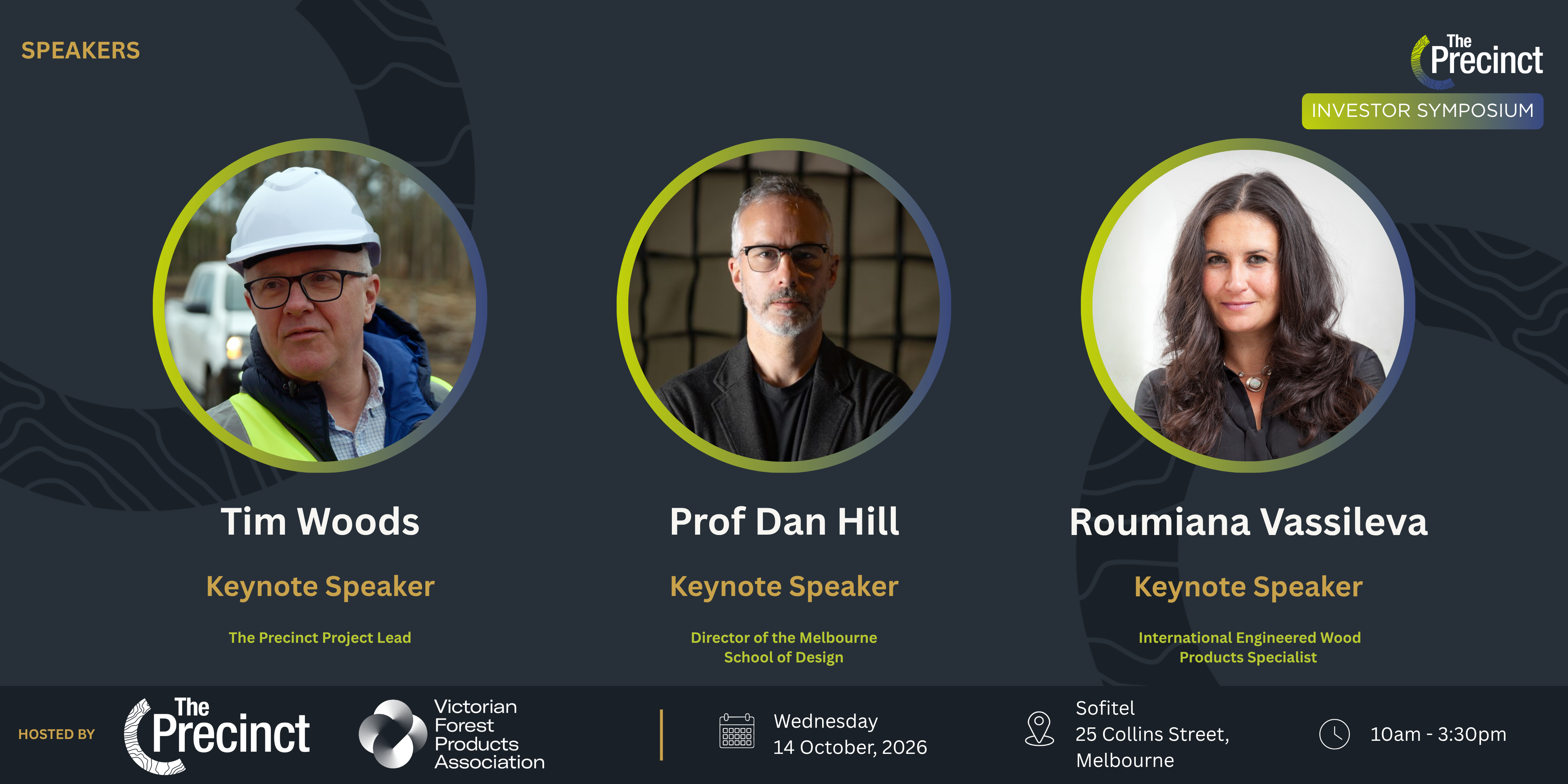
Tim Woods
Tim Woods is Managing Director of IndustryEdge and one of Australia’s leading analysts of the forest and wood products sector. With extensive experience across timber markets, manufacturing, trade and investment, Tim brings a deep understanding of the forces shaping Australian industry. Tim is leading the team focussed on delivery of the technical, industrial and investment case for the integrated advanced manufacturing hub.
Roumiana Vassileva
Roumiana Vassileva is an international expert in engineered wood products, with more than 25 years’ experience across the global LVL industry. As Business Development Director – EWP at Raute, she has worked closely with leading engineered wood manufacturers and has driven market development for LVL, I-beams and mass timber. Roumiana brings deep expertise in LVL technology, manufacturing, markets and the opportunities for engineered timber to reshape modern construction and unlock new pathways for growth.
Professor Dan Hill
Professor Dan Hill is Director of the Melbourne School of Design at the University of Melbourne and AFWI (Australian Forest Wood Innovations) Centre for Climate-Smart Forestry Built Environment Theme Lead. He is a designer, urbanist and educator working at the intersection of design, technology and cities. His international career spans architecture, urban development, government and innovation, including senior roles with the Swedish Government’s Vinnova, Arup and the UK’s Future Cities Catapult. Dan brings a strong focus on how design, materials, technology and new approaches to construction can help shape more sustainable, adaptable and affordable places and homes.
Recent News
November 19, 2026
The Precinct takes centre stage in global conversation on low-carbon construction
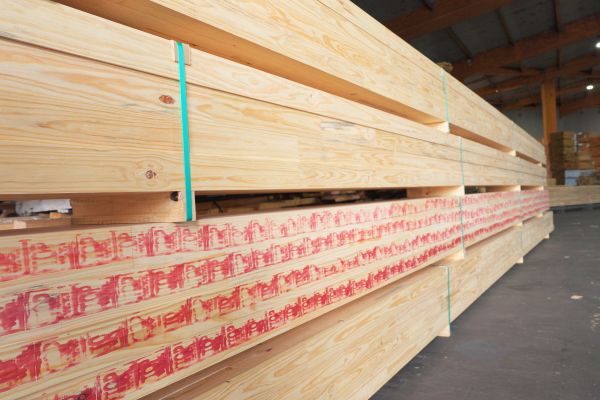
The Green Triangle’s advanced manufacturing development, The Precinct, has been showcased at a major building-industry conference as a practical pathway to decarbonising Australia’s built environment. The Precinct CEO Tim Woods delivered a headline presentation at the 2026 DesignBUILD and Intelligent Building Forum in Melbourne, outlining how Australia’s plantation resources, engineered wood products and prefabricated construction can support a lower-carbon building sector. Presenting on Plantation to Product to Prefab: A Core Pathway to Decarbonising the Built Environment, Mr Woods drew on Forest & Wood Products Australia’s (FWPA) Building a Low-Carbon Future for Australia report which found that maximising timber use in a modelled traditional single-storey house could reduce embodied construction emissions by approximately 46 per cent. It also found that Australia’s forest and wood products industry, responsible for about 0.3 per cent of national net emissions, has a credible pathway to Net Zero as early as 2029 through greater timber uptake and targeted industry decarbonisation. “The forest and wood products industry has a significant opportunity to contribute to Australia’s decarbonisation ambitions, not only by reducing its own emissions, but by increasing the use of renewable, carbon-storing materials across the built environment and that pathway is through modern methods of construction,” Mr Woods said. “Growing plantations capture carbon from the atmosphere, which can then be stored for decades in engineered wood products and buildings. Expanding timber use in construction, particularly through engineered wood products and prefabrication, can deliver lasting carbon benefits while improving construction efficiency and reducing reliance on more emissions-intensive materials, such as concrete and steel.” Mr Woods highlighted the Green Triangle’s large-scale plantation resource and the opportunity to capture greater domestic value from fibre traditionally exported as softwood pulp log and hardwood chip by creating structural engineered wood products, including Glue Laminated Timber (GLT) and Laminated Veneer Lumber (LVL). “Our vision is an integrated, circular manufacturing model that maximises resource efficiency, retains carbon in long-lived building products and uses manufacturing residues to generate renewable energy to fuel the process,” he said. “The opportunity is to connect this manufacturing technology with the growing customer demand for low-carbon building design.” Mr Woods said The Precinct was connecting forestry, manufacturing, construction, research and government to accelerate investment and policy support. “The Green Triangle has the resource base, industrial capability and strategic location to play a major role in Australia’s low-carbon construction future,” Mr Woods said. “By linking sustainable plantations with advanced manufacturing and prefabricated construction, we can create high-value products, support regional jobs and help build more sustainable homes and buildings.” Opened by Melbourne Lord Mayor Cr Nick Reece, the forum brought together more than 100 industry leaders, including keynote speakers Adam Faircloth and Benoit Gilbert, who led work from Queensland’s Department of Primary Industries, which informed elements of The Precinct’s product pathway.