The Precinct takes centre stage in global conversation on low-carbon construction
The Green Triangle’s advanced manufacturing development, The Precinct, has been showcased at a major building-industry conference as a practical pathway to decarbonising Australia’s built environment.
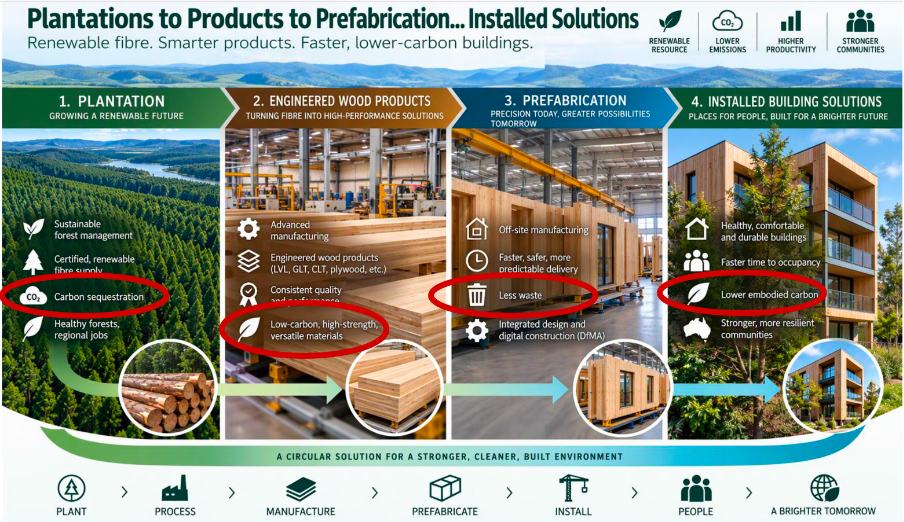
The Precinct CEO Tim Woods today delivered a headline presentation at the DBI2026 International conference on Decarbonising the Building Industry in Melbourne, outlining how Australia’s plantation resources, engineered wood products and prefabricated construction can support a lower-carbon building sector.
Presenting on Plantation to Product to Prefab: A Core Pathway to Decarbonising the Built Environment, Mr Woods drew on Forest & Wood Products Australia’s (FWPA) Building a Low-Carbon Future for Australia report which found that maximising timber use in a modelled traditional single-storey house could reduce embodied construction emissions by approximately 46 per cent.
It also found that Australia’s forest and wood products industry, responsible for about 0.3 per cent of national net emissions, has a credible pathway to Net Zero as early as 2029 through greater timber uptake and targeted industry decarbonisation.
“The forest and wood products industry has a significant opportunity to contribute to Australia’s decarbonisation ambitions, not only by reducing its own emissions, but by increasing the use of renewable, carbon-storing materials across the built environment and that pathway is through modern methods of construction,” Mr Woods said.
“Growing plantations capture carbon from the atmosphere, which can then be stored for decades in engineered wood products and buildings. Expanding timber use in construction, particularly through engineered wood products and prefabrication, can deliver lasting carbon benefits while improving construction efficiency and reducing reliance on more emissions-intensive materials, such as concrete and steel.”
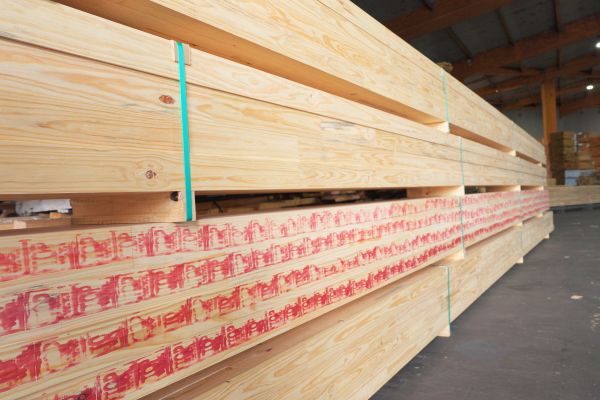
Mr Woods highlighted the Green Triangle’s large-scale plantation resource and the opportunity to capture greater domestic value from fibre traditionally exported as softwood pulp log and hardwood chip by creating structural engineered wood products, including Glue Laminated Timber (GLT) and Laminated Veneer Lumber (LVL).
“Our vision is an integrated, circular manufacturing model that maximises resource efficiency, retains carbon in long-lived building products and uses manufacturing residues to generate renewable energy to fuel the process,” he said.
“The opportunity is to connect this manufacturing technology with the growing customer demand for low-carbon building design.”
Mr Woods said The Precinct was connecting forestry, manufacturing, construction, research and government to accelerate investment and policy support.
“The Green Triangle has the resource base, industrial capability and strategic location to play a major role in Australia’s low-carbon construction future,” Mr Woods said.
“By linking sustainable plantations with advanced manufacturing and prefabricated construction, we can create high-value products, support regional jobs and help build more sustainable homes and buildings.”
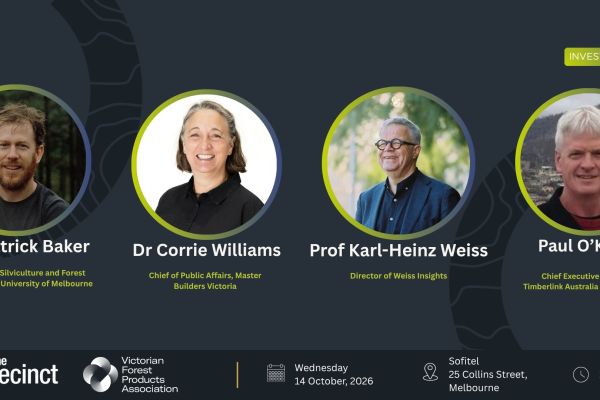
Opened by Melbourne Lord Mayor Cr Nick Reece, the forum brought together more than 100 industry leaders, including keynote speakers Adam Faircloth and Benoit Gilbert, who led work from Queensland’s Department of Primary Industries, which informed elements of The Precinct’s product pathway.