The Precinct Plan
An End-to-End Plantation to Prefabrication Model
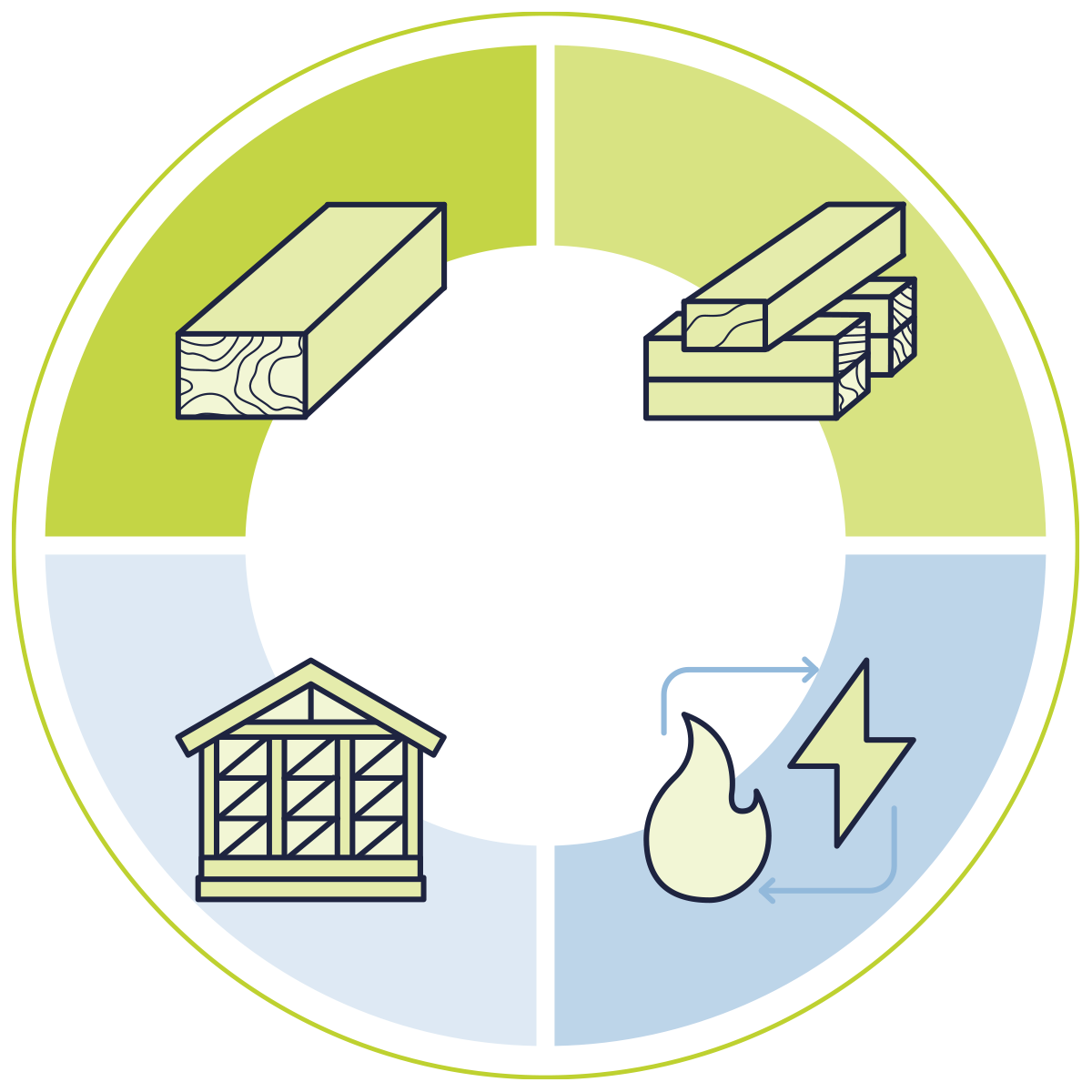
The Precinct proposes to bring together Green Triangle grown hardwood (Eucalyptus globulus) and softwood (Pinus radiata) plantation fibre supply, advanced engineered wood manufacturing and prefabricated housing component production within a single, coordinated industrial ecosystem fuelled by a circular economy.
Later project phases will extend manufacturing to include wall, floor and roof assemblies, modular and panelised systems, integrated building components and complete prefabricated dwellings. These products will be developed in conjunction with Australian builders, architects and designers, meeting real market demand.
These integrated work stream approaches can reduce cost, improve efficiency and capture maximum value from existing fibre resources. They support a platform for continuous research, innovation, education and training.
Phased development of value-adding options allows the Precinct to develop in the mutual interest of the users, supporting its sustainability and addressing complex needs in Australia’s dwelling construction market.
Plantation hardwood and softwood fibre will be transformed at the site through a series of value cascades covering:


Zero Waste.
Maximum Value.
Net Zero Aligned.
Fibre is used for its highest value purpose first at the Precinct, with residues and by products supporting additional value including:
- On site bioenergy for process heat and electricity
- Biochar and soil products
- Fertiliser and emerging bio products
- Future bio refinery pathways
All fibre is utilised, delivering operational efficiency, reduced emissions and measurable climate benefits aligned with Australia’s net zero goals.

A multi user model with shared site infrastructure
Multiple specialist manufacturers will co locate within one precinct, sharing core infrastructure and utilities, including energy, water and waste systems. Integration extends to roads, logistics and transport, with fully coordinated fibre intake and product flow coordination.
Each participant retains independent operations while benefiting from reduced capital costs, integrated logistics and accelerated market access. This allows each partner to focus on what they do best.
This integrated industrial ecosystem also supports innovation, research and extension prioritising workforce development and a continual focus on product innovation.
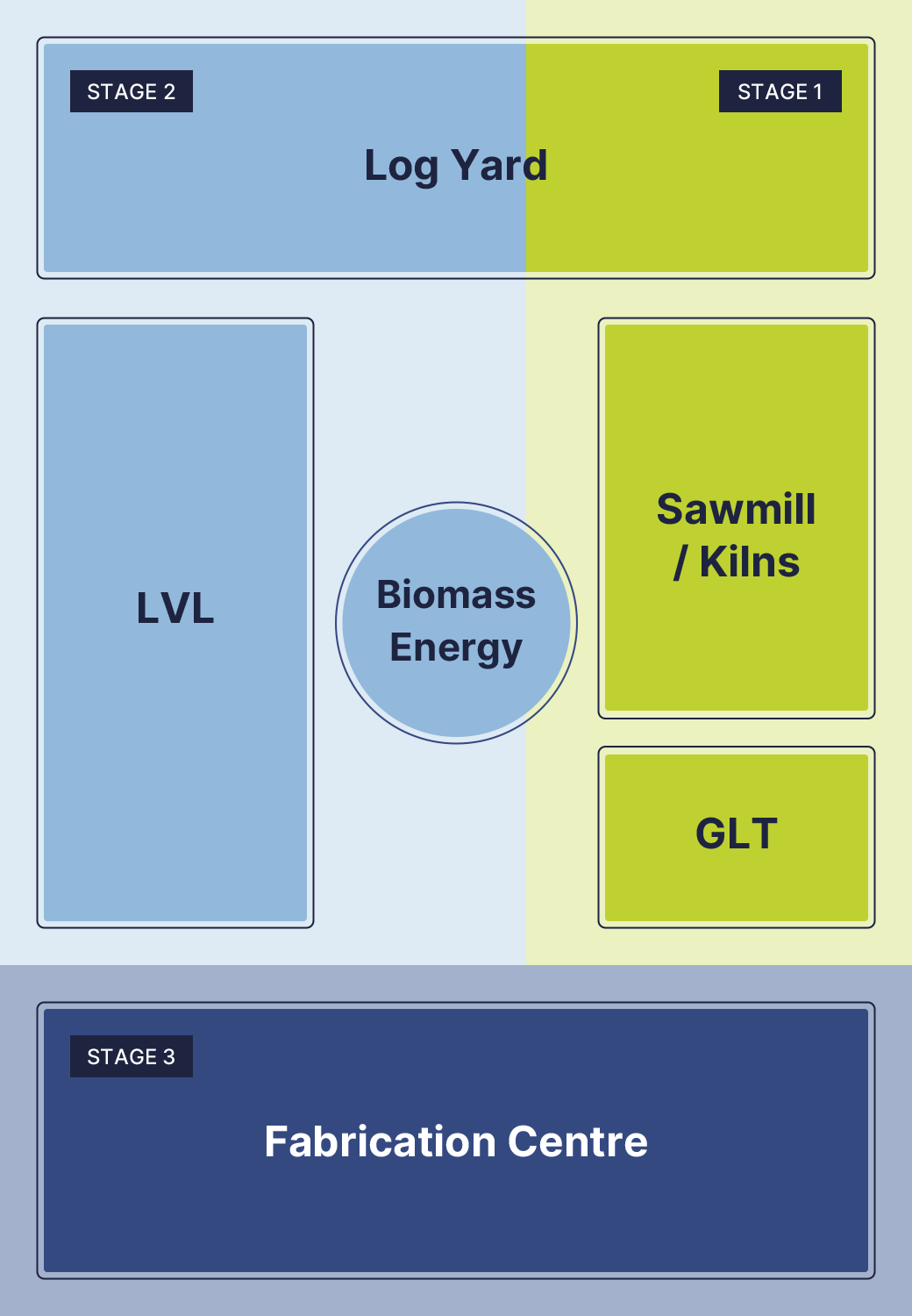
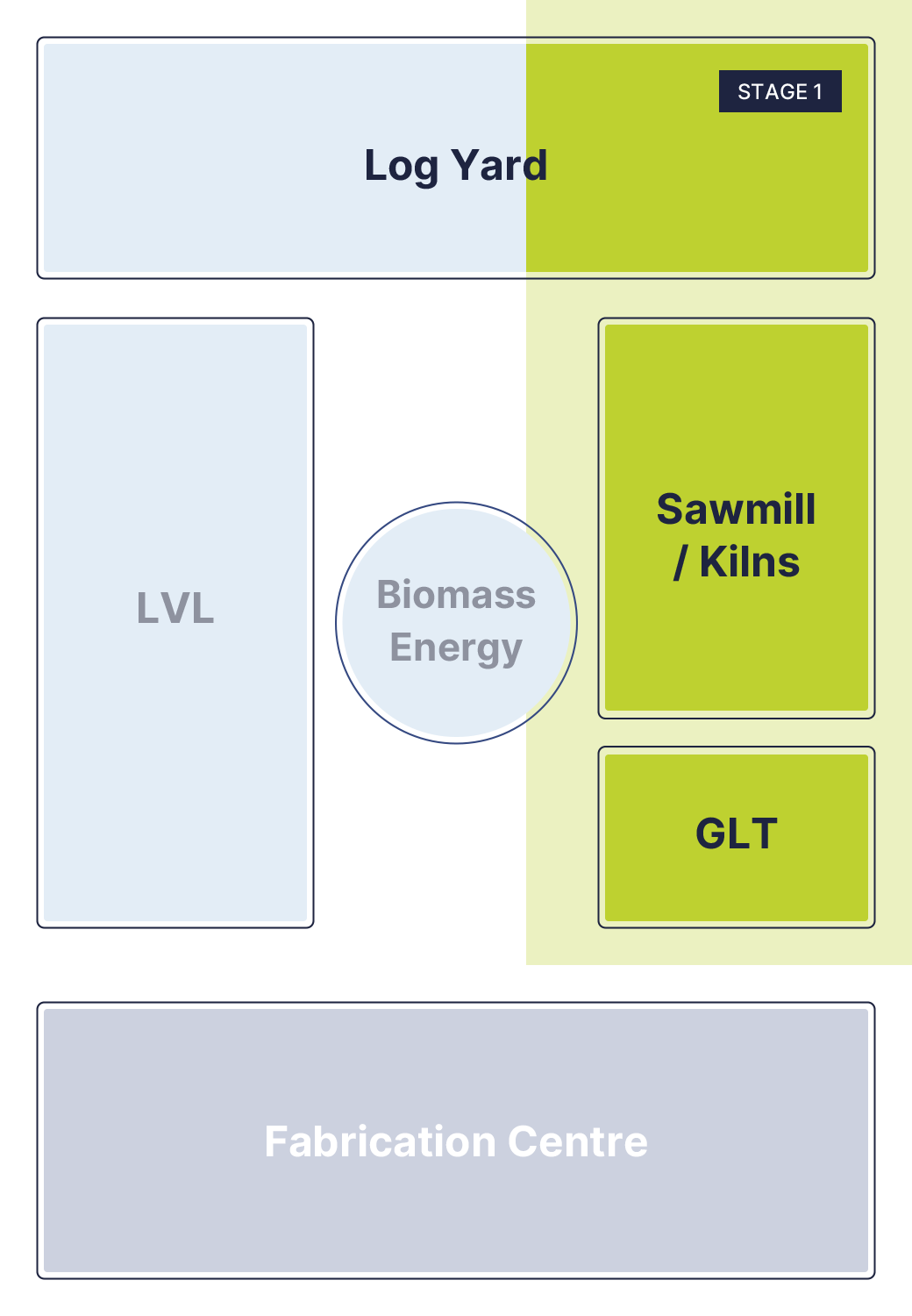
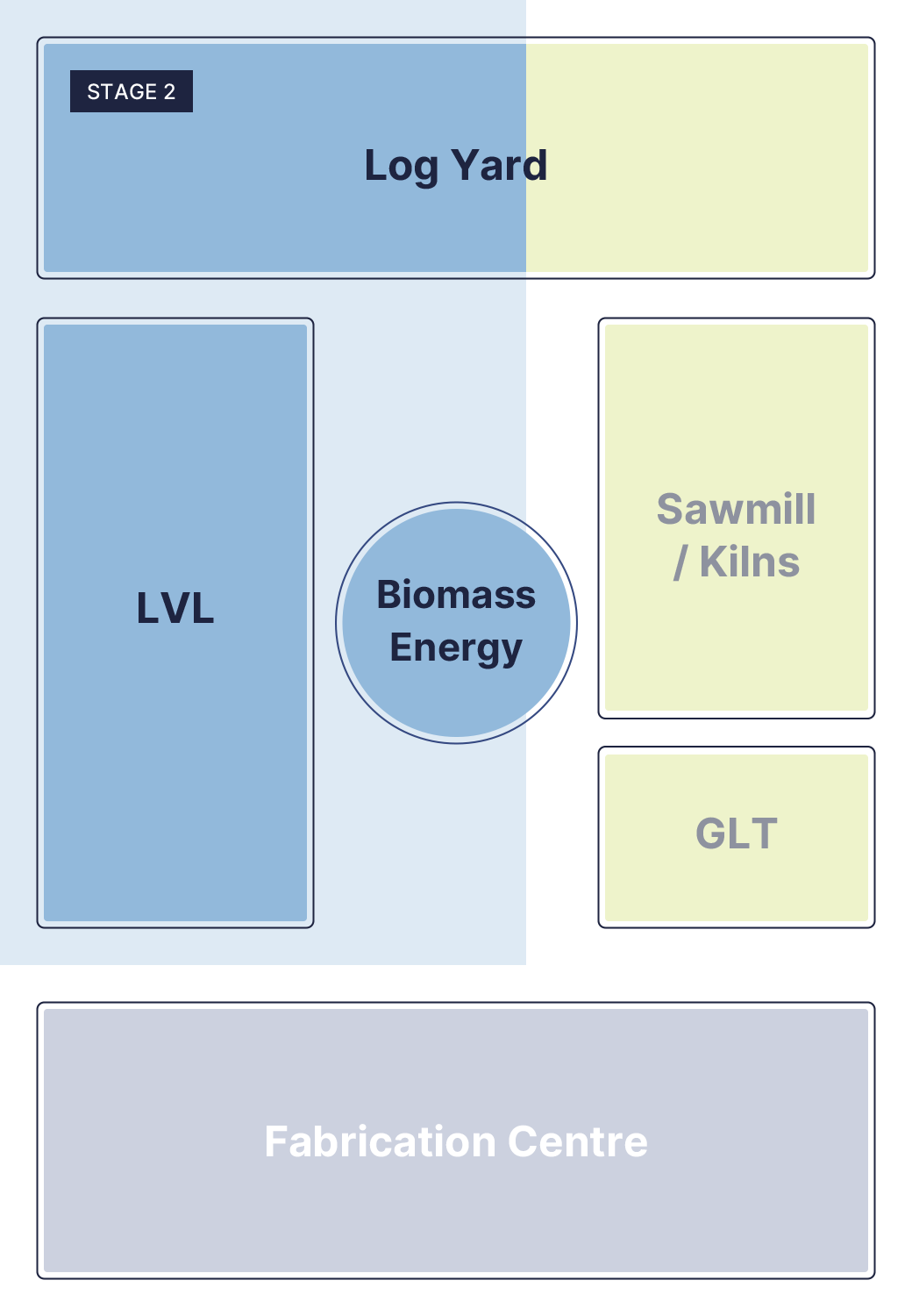
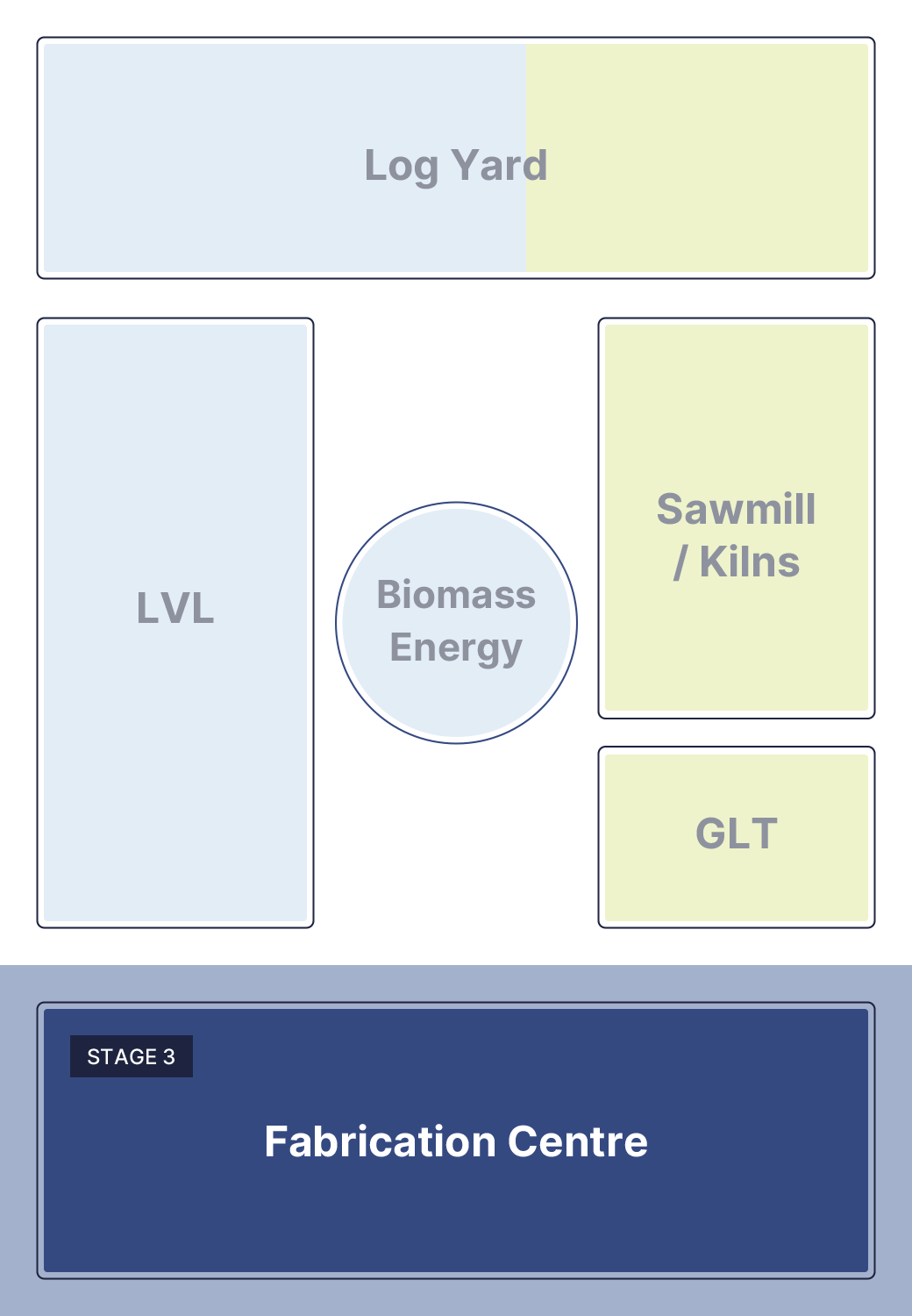
The Precinct follows a staged approach
Stage 1
Concept Development - 2026
GLT and LVL Feasibility Study and Concepts.
Stage 2
Integrated Feasibility & Operational Research – 2026-2027
Engineered wood products, prefabricated housing, bioenergy, bio products and business model design.
Stage 3
Commercial and Operating Models - 2027
Implementation-ready business case and precinct blueprint.
Established
Feasibility Commences
Feasibility Completed
4Q 2025
1Q 2026
3Q 2027
Established
4Q 2025
Feasibility Commences
1Q 2026
Feasibility Completed
3Q 2027
The Precinct is both an industrial development and a living innovation platform.
Supported by Australian Forest Wood Innovations (AFWI) and leading Australian universities, research focuses include engineered wood products and systems, Bio adhesives and materials, Manufacturing process optimisation, Circular economy and carbon accounting.
Parallel workforce development partnerships are being explored to ensure the availability of skilled labour for this next generation manufacturing.
- Engineered wood products and systems
- Bio adhesives and materials
- Manufacturing
process optimisation - Circular economy and carbon accounting